How Graduate Students Can Use AI Responsibly Without Ghostwriting
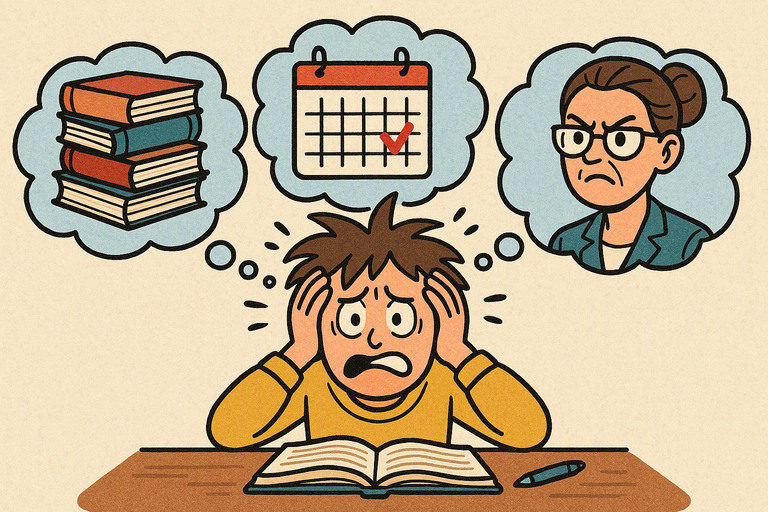
Literature reviews, comprehensive exams, dissertation chapters. All due in the same month. When the research load piles up, using AI tools to handle the load and even turn a ChatGPT essay into original work can feel like a lifeline for graduate students.
But using AI responsibly during these high-pressure stretches isn't just about staying out of trouble. It’s also about protecting the integrity of the work you’ve spent years building toward.
Let’s walk through three of the biggest risks students face when leaning on AI and explore concrete ways to stay both productive and above board.
Three Core Problems
1. The Blurry Line Between "Assistance" and "Authorship"
AI can draft an outline, summarize a dense article, or rephrase an awkward paragraph in seconds. That kind of speed is seductive, and it's easy to just slide from using AI to fully outsourcing to it.
Even when you simply use AI to "clean up" your work, you don’t realize how much of your original thinking could get replaced along the way. This may include
letting AI restructure your whole argument, not just sentences,
using AI-generated transitions that subtly change your paper’s claims, or
accepting AI's synthesis of sources without checking it against the originals.
2. Fabricated or Misrepresented Sources
Large language models also generate citations that look plausible but don't exist. They also sometimes misattribute real ideas to the wrong writer or scholar. In a research context, this isn't a minor glitch but rather a direct threat to scholarly credibility.
Graduate students under deadline pressure are especially vulnerable to this problem. When you’re exhausted and just need one more citation to finish a section, it's tempting to just trust the output without verifying it.
3. Erosion of Analytical Skill
This third problem is less obvious, but it gets arguably more serious over the long run. Graduate school exists to build a person’s capacity for independent, rigorous thought, not just to produce finished documents.
If AI consistently does the analytical heavy lifting (such as identifying patterns, drawing conclusions, and framing arguments), students risk graduating with polished outputs but underdeveloped reasoning muscles. That gap tends to surface painfully during a defense or a job talk, when there's no AI in the room to help.
Using AI Responsibly for Research and Writing
Most academic integrity policies weren't written with today's AI tools in mind, which leaves students navigating ambiguity on their own. Thus, it might help to think of AI use on a continuum rather than a yes-or-no switch.
Generally “low-risk” uses of AI include
brainstorming research questions or angles,
explaining a confusing concept in plain language,
checking grammar or formatting consistency, and
generating an initial reading list for the student to verify independently.
Meanwhile, generally “high-risk” uses may include
having AI write substantive analysis presented as the student’s own,
submitting AI-generated citations without verification, and
letting AI draft large sections of a paper without disclosure when disclosure is required.
The “goal posts” will keep shifting as institutional policies catch up, but when in doubt, one of the safest moves is transparency.
Build an AI Disclosure Habit
Ask your advisor directly what's permitted and document how you used AI tools in your process. You can keep a simple running log of every substantive AI interaction, like this:
Date and tool used
What you asked it to do
How the output was modified or verified before inclusion
This habit does two things. First, it creates a defensible record if your process is ever questioned, and second, it forces you to notice how much AI is actually shaping your work.
Another crucial step is closing the gap where AI tends to do the most damage: sourcing.
Adopt a "Verify Before You Use" Rule for Every Citation
Never let an AI-generated citation into your work without pulling the original source yourself. This single rule eliminates the most damaging failure mode of AI use (i.e., fabricated references) almost entirely.
A practical way to enforce this is to keep AI-assisted drafting and source verification as two separate steps in your research workflow. This separation makes it much harder to accidentally skip verification when you're tired.
Neither disclosure nor verification can directly build the reasoning skills graduate school actually requires though. That calls for a habit you control entirely on your own.
Practice "AI-Free" Analytical Reps
Just as athletes need unassisted training to build real strength, graduate students need regular stretches of analysis done entirely without AI. The goal is to keep your own reasoning muscles active, not just your output.
Deliberately reserve certain tasks for yourself, on a consistent schedule, such as the following:
Draft your first take on any argument or literature synthesis in a plain document before even opening an AI tool,
Set aside one reading or source per week to analyze and annotate without any AI assistance, and
explain your argument out loud, or to a peer, before checking whether AI's phrasing changes your meaning.
Habits like these help keep you the author of your own thinking.
Self-directed practice keeps your reasoning sharp, but it's still useful to have someone qualified to periodically test that reasoning from the outside.
Bring in Human Tutors for the Analytical Core
This is the solution graduate students overlook most often, and it's arguably the most helpful. Human tutors, like the expert writing consultants from ESSAYO, should handle the parts of your work that build your own reasoning.
Where AI is fast but shallow, a human tutor can push back, ask how your argument holds together, and catch conceptual gaps that a language model simply isn’t built to notice.
Folding human tutors into a heavy research phase can be as simple as
submitting your AI-assisted draft and assignment guidelines through ESSAYO’s secure platform,
having a tutor examine your work and provide expert feedback, and
receiving detailed and personalized annotations and a clear revision plan within 24-48 hours.
Pairing AI's speed with a tutor's judgment allows graduate students to both draft efficiently and ensure that the thinking underneath remains strong and genuinely theirs.
Keeping Things Balanced
There's no need to treat every AI interaction as a moral test. Most graduate students using these tools are simply trying to survive a demanding season with their integrity (and their sanity) intact. That's a perfectly reasonable goal.
The healthiest approach isn't avoidance but intentionality. Know which tasks you're comfortable handing off to AI, which ones need a human check, and which ones need to stay entirely yours.
A few grounding questions to ask yourself before any AI-assisted task include
Would I be comfortable explaining exactly how I used AI here to my advisor?
Have I verified anything AI produced before relying on it?
●Does this task build a skill I still need to develop myself?
Heavy research phases will always be stressful. But with clear habits like disclosure, verification, and human mentorship working alongside AI, you can move through them faster and protect the analytical muscles and scholarly judgment that graduate school is meant to build.