
Why Automated AI Humanizers Fail Academic Integrity Checks
Every semester, more students turn to AI writing tools to help them get papers done faster. When those papers get flagged by AI detectors, the next stop is often an “AI humanizer,” which is a tool that promises to rewrite AI-generated text so it reads as human.
But understanding why automated AI humanizers fail is essential for any student who wants to avoid a much bigger problem than a low grade: an academic integrity violation.
Why Students Reach for AI Humanizers First
The appeal of AI humanizers is obvious. Students are under pressure with tight deadlines, heavy course loads, and rising expectations around originality, so AI writing tools like ChatGPT, which can produce a full draft in minutes, can feel like an easy fix.
But there’s a problem that comes right after. Most institutions now run submissions through AI detection software, and raw AI-generated text is usually caught immediately. That's where humanizer tools enter the picture. Students assume that humanizing AI text is a way to slip past detection software: a “shortcut” around a shortcut. Unfortunately, that assumption is where things can begin falling apart.
Why Automated AI Humanizers Fail
AI humanizers work by swapping words, restructuring sentences, and adding irregularities meant to mimic human writing patterns. On the surface, this process can lower an AI detection score, but lowering a score is not the same thing as producing legitimate, honest academic work.
The resulting drafts often still fail academic integrity checks, and here’s why:
Detection tools are evolving faster than humanizers. AI detection companies actively study humanizer outputs and update their models accordingly. A tool that dodges detection today often gets caught within weeks because detectors are trained specifically on humanized patterns.
Humanized text often reads worse, not better. In the process of avoiding AI-pattern detection, humanizer tools frequently introduce awkward phrasing, unnatural synonym swaps, or sentences that technically vary in structure but don't actually sound like a real student wrote them. Professors familiar with a student's usual voice can also often tell something is off, even without a detector.
The underlying content is still AI-generated. This is the difference between humanizing AI and rewriting, which is a distinction many students miss entirely. Humanizing changes surface-level word choice and sentence rhythm. Rewriting, done properly by a person, changes the actual thinking, argument structure, and reasoning behind the paper.
Many institutions now flag humanized text as its own category. Some detection platforms specifically identify "AI-to-human" conversion patterns. These are the telltale signs left behind when software has manipulated text that a detector once recognized. Ironically, using a humanizer can create a distinct fingerprint of its own.
Metadata and writing history don't lie. Learning management systems can track drafting behavior, paste events, and document history. A paper that appears with no revision history, pasted in as a single block, raises questions regardless of what an AI detector says.
At the root of all this is a simple mismatch: humanizer tools are built to fool pattern-recognition software, not to produce genuinely original thought. They optimize for a score, not for understanding, and that's a fundamentally different goal than what academic writing is supposed to demonstrate. Academic writing should reflect a student's own reasoning, research, and voice.
The Risks Go Beyond Failed Detection Checks
Even when a humanizer successfully avoids detection, students take on real risks and costs by relying on them:
Academic penalties if the tool is later flagged retroactively as detection technology improves
Weakened learning outcomes since the student never actually practiced the skill the assignment was meant to build
Inconsistent writing quality across assignments since automated AI to human text conversion doesn't understand context, tone, or the specific requirements of a given course
Erosion of trust with instructors once any inconsistency is noticed, which can affect how future work is evaluated
None of these risks show up on the humanizer's dashboard. They show up later in a student’s academic journey, when it's much harder to fix the problem.
A Better Path: Human Review Instead of Automated Rewriting
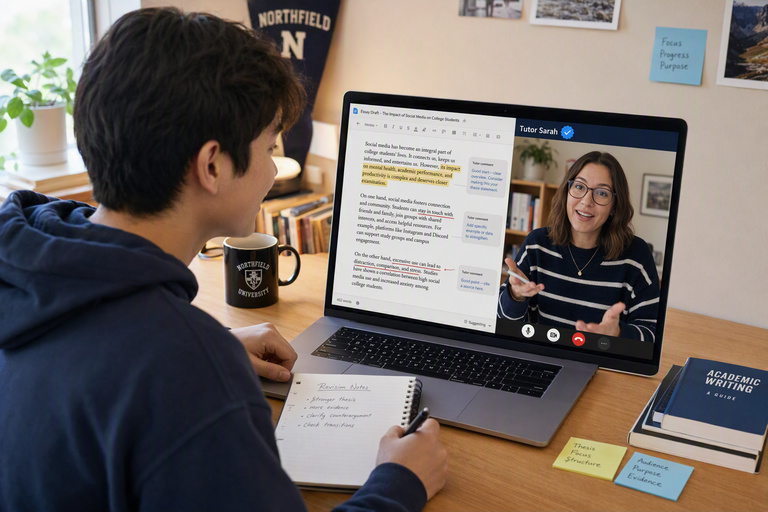
If a student’s actual goal is to submit strong, original, detection-proof work, the far more reliable solution is not another automated tool: It's a human tutor. A qualified tutor from ESSAYO does everything a humanizer cannot:
Identifies weak arguments and helps the student strengthen their own reasoning, rather than just rewording sentences
Teaches the student to develop an authentic voice, so future papers sound consistent and genuinely theirs
Catches structural and logical issues an AI detector isn't even designed to look for
Builds real writing and revision skills over time, so students need less help with each successive assignment
Produces work with a legitimate paper trail: feedback, revisions, and drafts that reflect actual effort
The process of working with a tutor takes more time than running text through a humanizer, but it produces writing that is authentically the student's own, and therefore doesn't need to dodge detection in the first place.
For students who want to submit work with real confidence, skipping the humanizer and going straight to human feedback isn't just the safer choice. It's the one that actually pays off.